West Hampstead NW6
Painting and decorating in West Hampstead, NW6
West Hampstead decorating is occupied conversion flats and terrace rooms; dust control on a shared stair is part of the method. Addresses sit with London Borough of Camden. We visit from Unit 3 Palace Court, 250 Finchley Road, London NW3 6DN; we do not quote from photographs.
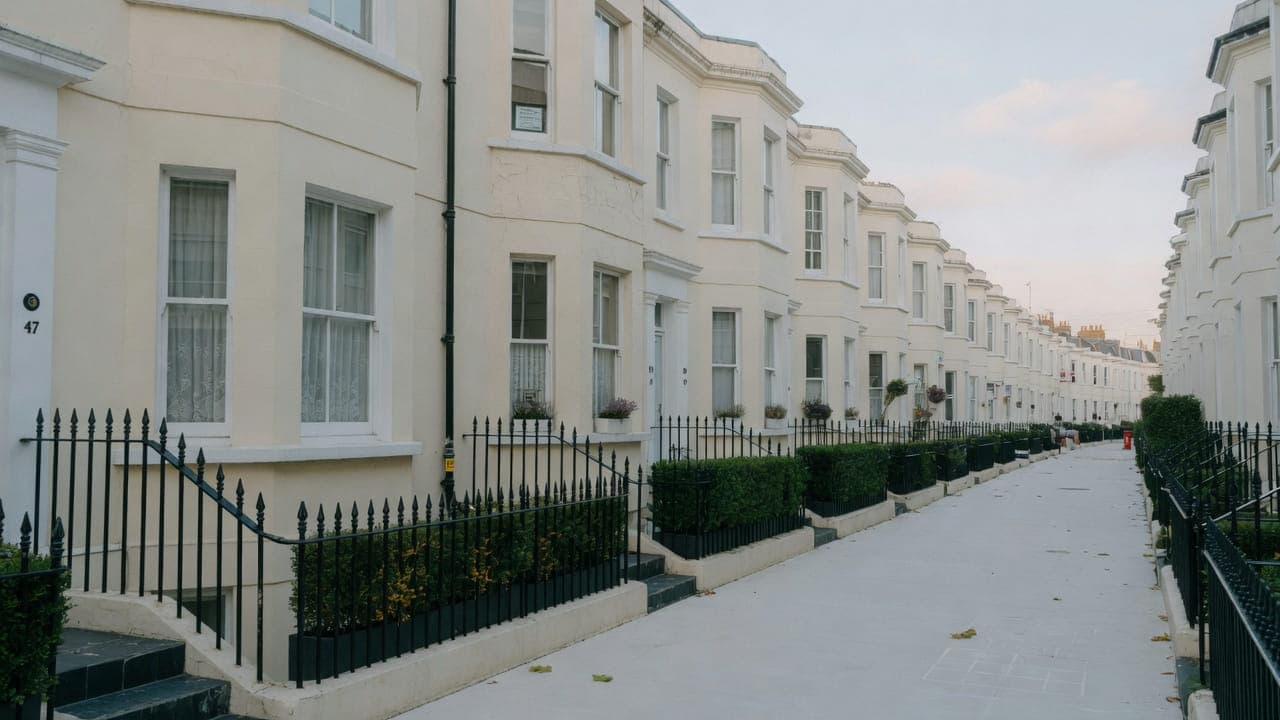
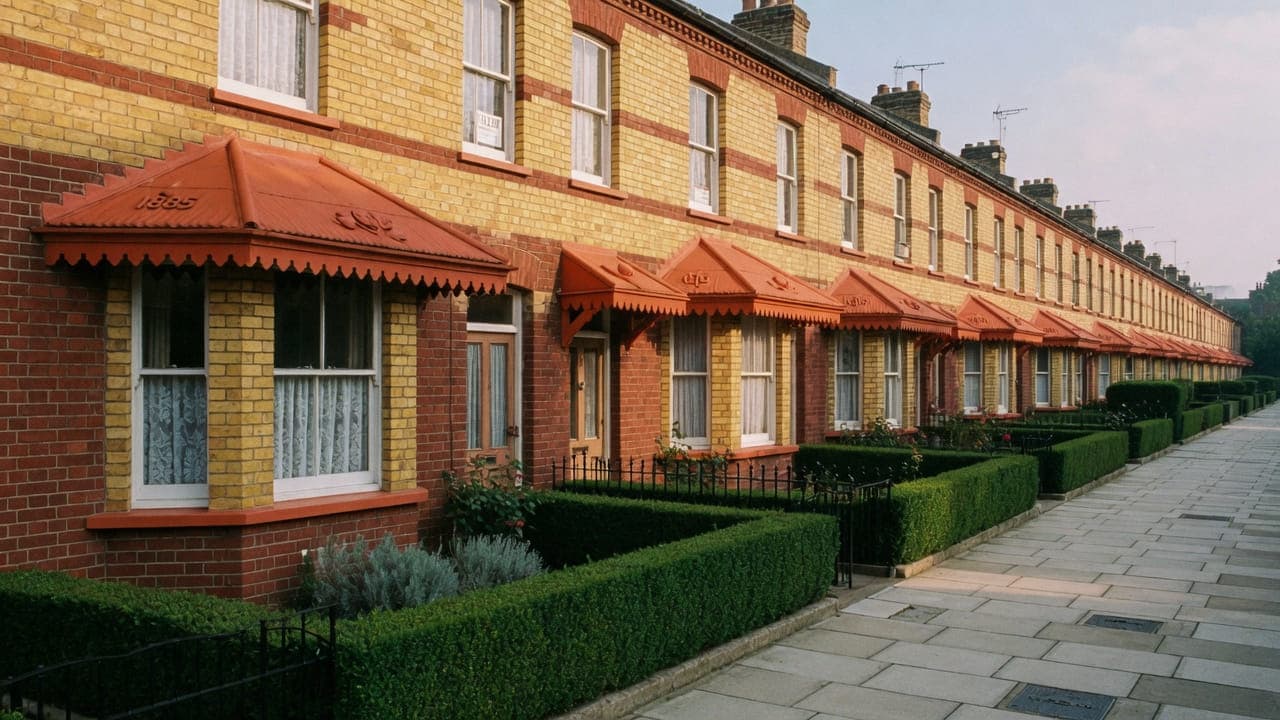
West Hampstead (NW6) is Camden. The stock is largely Victorian and Edwardian terraces and semi-detached houses, many converted to flats, with later mansion blocks near the transport interchange. West End Lane is the commercial spine. Behind it, brick terraces hold original bay windows, timber floors and stacked bathrooms on half-landings. Rear returns and half-landings are the rooms that show every thin fill.
The decorating fabric is conversion plaster: later patches on original walls, lining that has been painted until it fails, and joinery that has been cut in around a family still in occupation. Occupied-home sequencing is the default, not a courtesy. Three stations on West End Lane — Underground, London Overground and Thameslink — make daytime loading competitive; materials are planned off the high street.
Hampstead Property Services Group Limited (company no. 17404557) carries out this work in West Hampstead from Unit 3 Palace Court, 250 Finchley Road, London NW3 6DN.
See also painting and decorating in North West London and kitchens, bathrooms and decorating in West Hampstead.
West Hampstead, NW6
Who painting and decorating in West Hampstead is for
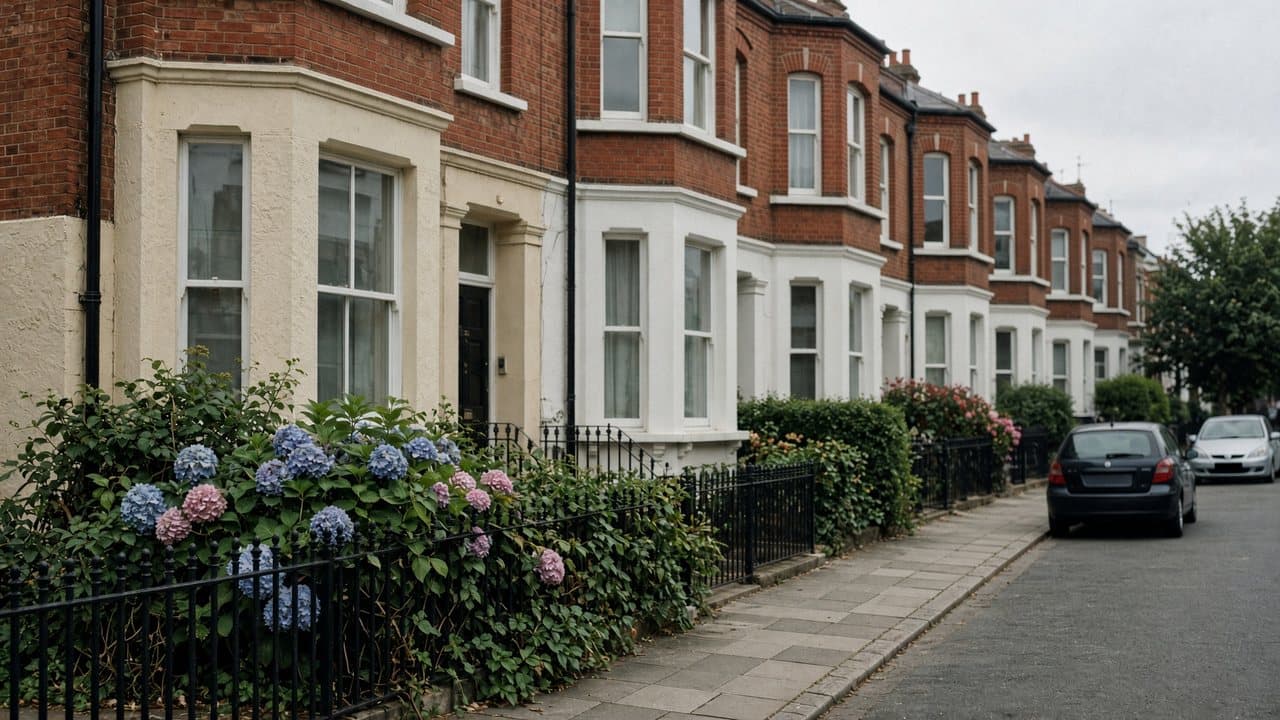
West Hampstead, NW6, is Camden. Converted Victorian and Edwardian terraces behind West End Lane are decorated with the household still in them. One- and two-bedroom demises, bay-fronted front rooms, rear-return walls that have been patched more than once, and bedrooms off a half-landing are the brief. Later mansion blocks near the interchange are a different tenure and a different agent. Three stations make daytime loading competitive; materials are planned off the high street.
The fabric is conversion plaster: later patches on original walls, lining that has been painted until it fails, and joinery cut in around a family that has not left. Party-wall noise from rubbing down belongs in the working hours. Sashes in the bays are joinery. The communal front door, the entrance hall and the stair are the freeholder's. We decorate the demise. We do not assume a van can stand on West End Lane.
Occupied houses, sashes and original joinery in West Hampstead
A typical instruction is a conversion flat decorated around occupation: rear-return walls that have moved, half-landing joinery, and a hallway shared with the rest of the house. Lining paper is specified where movement would telegraph through paint, not added as a silent extra. Party-wall noise from rubbing down belongs in the working hours. Mansion-block rooms near the interchange are a different tenure and a different agent, not a different honesty about filling.
What a visit settles before decorating starts in West Hampstead
A visit is a measuring exercise, not a sales call. These are the things we settle in West Hampstead before a figure is written.
01
Patchwork substrates in a converted house
A West Hampstead conversion typically has original plaster, a partition built in the 1970s, a patch where a doorway was closed, and a ceiling replaced after a leak, all within one room. We map that patchwork at the survey, because each background takes the coating differently and a single specification across all of them will show every join.02
Where the movement is
Terraced houses split into flats move, and the cracking follows the structure rather than the decoration. We look at the pattern — party wall junctions, ceiling perimeters, the line where a rear return meets the main house — and say where lining is genuinely warranted rather than hanging it everywhere as an insurance policy.03
Original joinery, and how much survives
Bay windows, picture rails, panelled doors and skirtings vary enormously between flats in the same house. We record what is original, what is a later replacement and what has been overpainted so many times the profile has disappeared, because stripping a detail back is a different instruction from coating it again.04
Ceiling condition after somebody else's leak
Water damage from a flat above is common in this stock and it is frequently covered rather than cured. We look for staining, the tell-tale bloom of a coating applied over a damp surface, and any history of a leak, because painting over an unresolved one wastes the work entirely.05
How the flat is actually used
In a one- or two-bedroom conversion there is nowhere to decant furniture to. We establish what can be moved, what must stay and where you will sleep, because in a flat this size the programme is built around that rather than around an ideal sequence.
What has to be right before decorating in West Hampstead
01
Rear-return plaster that has been patched twice
Half-landing bedrooms and rear-return kitchen walls show every thin fill. Later patches on original plaster, and lining that has been over-painted until it fails, telegraph through a modern coating unless the background is made honest first. Where lining is needed again, it is named on the proposal, not slipped in on the day.02
Furniture that moves twice
In a one- or two-bedroom demise there is nowhere to stack a household. Rooms are worked in halves; furniture moves to the centre, then back against a finished wall. Nothing is stored on the shared landing. Noisy rubbing down sits in the middle of the day because the flats above and below can hear it. Occupation is the default, not a courtesy.
Local facts that shape decorating in West Hampstead
Checkable facts that shape painting and decorating in West Hampstead NW6 — housing, council and the room as found.
- 01West Hampstead decorating is occupied conversion flats; dust control on a shared stair is part of the method.
- 02Three stations on West End Lane make daytime loading competitive; materials are planned off the high street.
- 03Lining paper is specified where conversion plaster would telegraph through paint, not slipped in on the day.
- 04Party-wall rubbing down is programmed into hours, not left as an all-day default.
- 05Hall decoration is a separate scope from the demise unless the freeholder is the client.
- 06Some streets toward Fortune Green are in conservation areas; exterior colour is checked on the map.
Painters and decorators in West Hampstead: prep, conservation and occupied homes
London Borough of Camden
Three stations on West End Lane make daytime loading competitive. Camden skip and scaffolding licences are required. Typical projects are light refurbishment of converted flats, kitchen replacements in rear returns, and occupied-home decorating. Party-wall noise in terraces belongs in the programme, not as an afterthought.
- West End Lane
- West Hampstead station interchange
- Fortune Green
- Hampstead Cemetery
How decorating is specified in West Hampstead
We survey each room's substrate, previous coating and joinery. Conversion plaster is mixed; the specification follows the wall, not the decade of the conversion. Prep standard, coats and sheen are written. Colour is sampled on the wall in the light the room actually has — a rear return on a terrace is not a west-facing bay.
Sashes in the bays are priced as joinery. Lining is on the proposal where it is needed. Spray is rarely the default in a furnished conversion. Snagging is in daylight and with the lights on, including on the half-landing where the light is poorest.
Coatings, sheens and joinery systems in West Hampstead
Where a room has three or four different backgrounds, the answer is usually a unifying preparation rather than a clever paint. That may mean a full skim in the worst cases, or lining where movement and patching would otherwise telegraph, or a stabilising primer across mixed absorbency so the topcoat dries evenly. Skipping that step is why a freshly painted conversion room can look patchy in a raking light within a week.
Colour behaves differently in these flats than in a larger house. A rear-return room with one window and a neighbouring wall a few metres away gets much less light than its plan suggests, and a fashionable deep colour that works in a showroom will close it down entirely. We paint large samples on the wall and look at them at the times of day you actually use the room, rather than deciding from a card in a hallway.
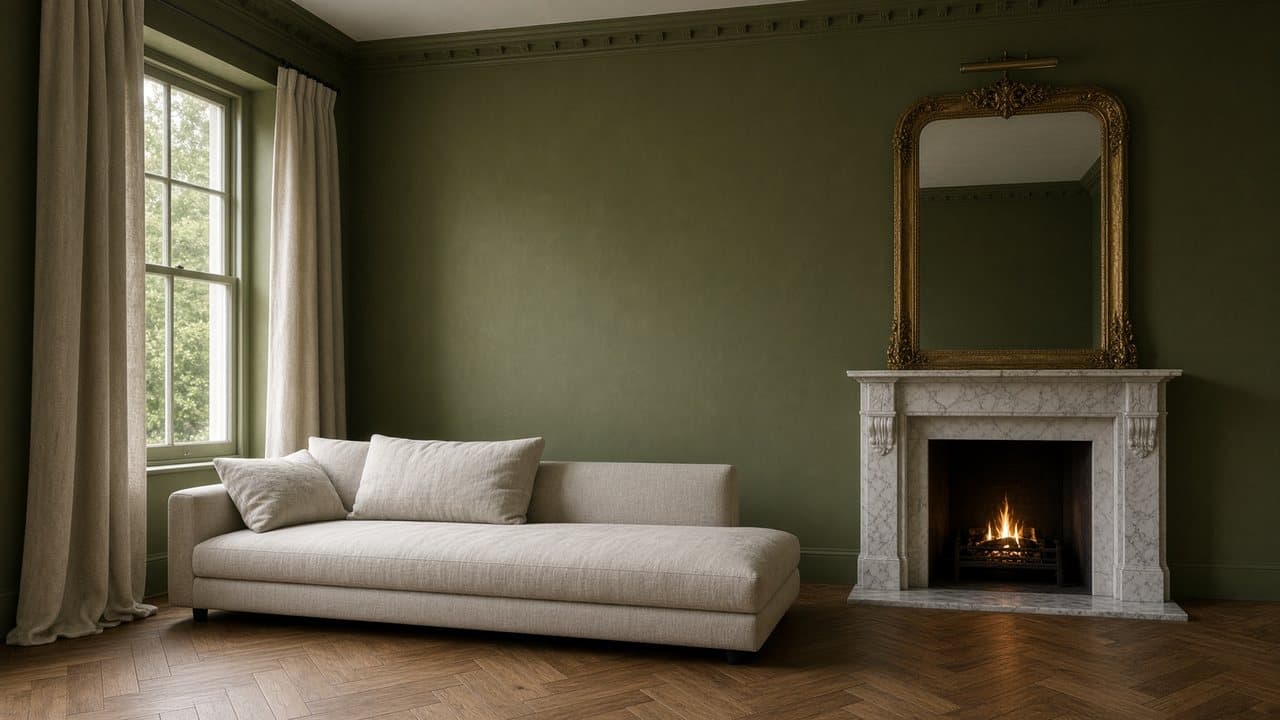
Joinery decisions matter more here because there is so much of it in a small space. A bay window with a boxed-in run, a picture rail, a panelled door and deep skirtings in a single room is a lot of hand work, and the sheen chosen affects how the room reads. A lower sheen on heavily overpainted joinery hides the accumulated thickness; a high one advertises it. We say which your joinery will flatter.
What a typical decorating instruction includes
Most work here is a converted flat redecorated while the household stays in it: a bay-fronted front room, a rear-return kitchen wall that has been patched more than once, bedrooms off a half-landing, and the flat's own hall. The constraint is space rather than fabric. In a one- or two-bedroom demise there is nowhere to stack a household, so rooms are worked in halves and furniture moves twice rather than once.
Outside the demise, nothing is assumed. The communal front door, the entrance hall and the stair are the freeholder's, and they are quoted only when the freeholder instructs them. Blown ceiling plaster and a bay that needs joinery repair are reported, not painted over. Work outside this main service is covered in our Other services catalogue; the scope and responsible business are confirmed before an instruction.
The full inclusion list is on the painting and decorating in North West London page.
How a decorating programme runs
Before a date is offered, three things are settled: who owns the hall, where the vehicle stands, and what hours the flats above and below can live with. Once those are fixed, the order is dictated by the route in. Bedrooms and the rear return come first, the hall and half-landing last, so the way through the flat stays protected until the end. Noisy rubbing down sits in the middle of the day, not at either edge of it.
- 01
Survey and specification
- 02
Programme for an occupied home
- 03
Preparation
- 04
Decoration
- 05
Joinery and details
- 06
Snag and clean
A West Hampstead decorating programme, stage by stage
The steps above are the method. Below is what those steps mean in West Hampstead NW6, in the order they happen on site. Durations are written after the room is measured, not before.
- 01
Protection, including the shared hall
The flat is covered and so is the route through a hall two or three households use. Decorating brings more traffic through a shared entrance than people expect, over more days, and the protection stays down for the duration. - 02
Washing, stripping and stabilising
Surfaces are washed, failed coatings removed, and mixed backgrounds brought to a consistent state. In a patched conversion room this is most of the job and it is what the finish depends on. - 03
Filling, lining and joinery
Cracks cut out and filled, lining hung where the survey identified movement, and joinery prepared by hand. Sanding dust is extracted at the tool, which in a small flat is the difference between a working week and an unlivable one. - 04
Coats, respecting drying
Ceilings, walls, then joinery, with drying time allowed rather than compressed. A north-facing rear return in winter dries slowly, and forcing the next coat onto a surface that is not ready is how a finish stays soft. - 05
Reinstatement and inspection
Furniture back, fittings rehung, floors cleaned and the shared hall returned to how it was. The rooms are inspected with you in daylight and touch-in is done at that visit.
What moves the figure on a West Hampstead decorate
We do not publish a price list, and we do not price from photographs. These are the things that move the figure in West Hampstead.
01
How mixed the backgrounds are
A room with original plaster, a later partition and a replaced ceiling needs more preparation than its size suggests. Unifying those backgrounds is where the labour goes, and it is established at the survey rather than discovered once the first coat shows every join.02
Whether lining is needed
Lining is a real cost and it is specified where movement or patching would otherwise telegraph, not as a default. We say where and why in the proposal, so it is a decision rather than an upsell.03
How much joinery a room holds
A bay, a picture rail, a panelled door and deep skirtings are hours of hand work in a room that measures as small. Joinery is the most commonly underestimated item in a conversion-flat decorate.04
Working in an occupied one-bedroom flat
Where there is nowhere to move furniture to, everything is covered, shifted and re-covered daily, and the working face is small. That is slower than an empty flat and it is priced as what it is.
Staying in the house while West Hampstead rooms are decorated
In a one- or two-bedroom conversion there is nowhere to go, so the programme is built around you rather than the other way round. We work one room at a time, restore each before opening the next, and keep the kitchen, the bathroom and a bedroom usable throughout wherever the sequence allows. Furniture is moved to the middle and properly covered rather than pushed into a corner under a sheet, and it goes back when the room is finished rather than at the end of the job.
Dust and smell are the daily reality. Sanding dust is extracted at the tool, which makes far more difference in a small flat than a dust sheet does, and we clean at the end of every day rather than at the end of the week. Water-based systems have reduced the smell substantially but a rear-return room with a window that opens onto a light well still ventilates slowly, and we will tell you which nights a room is better avoided.
How decorating in West Hampstead disappoints, and what prevents it
The commonest complaint after a conversion flat is decorated is that the walls look patchy in raking light. The cause is almost never the paint: it is mixed absorbency, where original plaster, a later partition and a filled patch each drink the coating differently and dry at different sheens. The fix is a stabilising primer across the whole surface, or lining where the patching is severe, and it is established at the survey rather than after the first coat.
The second is painting a ceiling below an unresolved leak. Staining from the flat above is common in this stock and frequently the leak has never actually been cured, so the mark returns within months and the work is wasted. We look for a history of water damage at the survey and say plainly that the ceiling should wait until the source has been dealt with, which is a conversation with the freeholder rather than with us.
The third is underestimating the joinery in a small room. A bay window with boxed-in returns, a picture rail, a panelled door and deep skirtings in a room that measures as modest is a great deal of hand work, and a figure built from wall area will be wrong. The joinery is counted rather than estimated, because it is the item that most often turns a cheap quotation into a disappointing job.
Handover, touch-in and the year after in West Hampstead
The inspection is done in daylight, room by room, because artificial light hides a missed cut line and flatters uneven sheen. We write the snag list and touch in at that visit. You receive a record of the systems, the sheens and the colour references used in each room, so a repair in three years matches rather than approximates. The shared hall is checked at the same time. Hampstead Property Services Group Limited is fully insured.
Conversions move, and the first winter after decorating tells you where. A hairline at a ceiling perimeter or along a party-wall junction is the building rather than the work, and it is worth dealing with once rather than watching. We return for it as one visit. Telephone 020 7101 3168 or write to office@hpsg.co.uk.
Arrange a visit or telephone 020 7101 3168.
Painting and decorating questions in West Hampstead
We do not publish a price list for painting and decorating in West Hampstead. West Hampstead decorating is occupied conversion flats and terrace rooms; dust control on a shared stair is part of the method. Addresses sit with London Borough of Camden. We visit from Unit 3 Palace Court, 250 Finchley Road, London NW3 6DN, then write a proposal against a defined scope. 020 7101 3168.
Internal painting and decorating within existing rooms in West Hampstead NW6 often does not need planning permission. London Borough of Camden still controls extract, windows and elevations where conservation, listing or Article 4 apply. We check the address. We do not assume permitted development.
A West Hampstead flat can be a matter of days or a small number of weeks depending on prep. A family house, occupied, takes longer because we work around you. Occupied conversions in West Hampstead NW6 shape the programme. The written programme follows the survey.
Occupied decorating in West Hampstead is ordinary. Rooms are sequenced so a kitchen, a bathroom and a bedroom stay usable where the programme allows. We will say so plainly at survey.
Yes. Occupied-home sequencing is the default here. A kitchen, bathroom and bedroom are kept usable where the programme allows.
Where movement would telegraph through paint, yes. It is written into the proposal, not slipped in on the day.
They change the hours. Rubbing down in a terrace is noisy work and is programmed, not left as an all-day default.
Only if the freeholder is the client. The demise is one instruction. The hall is a separate scope unless that is written. Common-parts protection is still in the method when we only paint the flat.
Usually not permission, but often notice. Decorating changes nothing structural, so a licence to alter — the document a freeholder issues when a demise is altered — is rarely engaged. What the lease may require is that the managing agent is told, that contractors are insured, and that the shared parts are protected. We are fully insured , and we read the clause before we start.
It moves twice in most rooms: to the centre and covered, then back against a finished wall so the other half can be worked. Larger pieces that cannot be lifted safely are worked around, and we say which those are at survey rather than on the first morning. Nothing is stored on the shared landing, because that is not ours to fill.
Yes. Occupied-home sequencing is the default here. Bedrooms and the rear return come first; the hall and half-landing last, so the way through the flat stays protected. The rear kitchen and a bedroom stay live until their turn. Empty is faster. Most conversions behind West End Lane are not empty.
Rarely. A conversion with furniture moving twice, party-wall hours, and original bay joinery still in place is brush and roller. We choose the method per room after survey, not as a way of shortening an occupied flat behind West End Lane.
Where rear-return patches, half-landing movement or old lining that has failed would telegraph through a new coating, lining is on the proposal as a named item. Sound walls are filled and coated. Lining is not a substitute for making a moving joint honest first, and the shared landing is not where we store the rolls.
Yes. A single bay-fronted reception is joinery and a defined wall. Whole-flat work adds the rear return, the half-landing, furniture moving twice, and a hall that belongs to the freeholder unless they instruct it. Only the rooms on the proposal are priced. West End Lane still is not the loading bay.
Not until the leak is resolved, and that is a question for the flat above and possibly the freeholder rather than for us. Painting over an active leak wastes the work and hides the evidence you may need. Where a leak has been properly cured and the surface has dried, the staining is dealt with by a stain-blocking system rather than by more coats of emulsion, and we specify it as such. We check for a history of water damage at the survey.
Sometimes, and it should be a decision rather than a habit. Where a conversion room has live cracking, patched backgrounds from several eras, or a ceiling that has been repaired more than once, lining gives a consistent surface that paint alone will not. Where the walls are sound, it is an unnecessary cost. We look at the pattern of cracking at the survey and say where it is warranted and where it is not, in writing.
It can be stripped back, which recovers the profile and is a genuinely transformative piece of work, or it can be prepared and overcoated, which is quicker and keeps the accumulated thickness. Stripping is slower and more expensive and it is the right answer on good original joinery in a principal room. We would tell you which of your joinery justifies it rather than recommending it everywhere or nowhere.
Yes, and it is what most of this work is. The method matters: one room at a time, furniture covered properly rather than shoved aside, dust extracted at the tool, and each room restored before the next is opened. We keep the kitchen, the bathroom and somewhere to sleep usable throughout. It is slower than an empty flat and priced accordingly, and it is far better than moving out for a fortnight.
Along its full length, for the whole programme rather than daily. Decorating brings more foot traffic through a shared entrance than most people expect and it goes on for longer than a delivery. We photograph the hall before we start, keep it clear every evening, tell the other households the dates, and check it with you at the end. In a house of three flats, the hall is what your neighbours judge the job by.
Sometimes beautifully and sometimes not, and the only honest way to know is to try it on the wall. These rooms often get far less light than their plan suggests, with one window and a neighbouring wall close by, so a colour that looks rich in a showroom can read as flat and closed. We paint large samples in situ and look at them at the times you actually use the room, rather than deciding from a card.
Often, and it should be a decision rather than a default. Where a conversion room has live cracking, patched backgrounds from several eras or a ceiling repaired more than once, lining gives a consistent surface that paint alone will not. Where the walls are sound but absorbency varies, a stabilising primer will do it for less. We look at the pattern at the survey and say which is warranted, in writing.
The rest of the flat, yes. The affected ceiling, not until the leak has actually been cured, which is a question for the flat above and possibly the freeholder. Painting over an active leak wastes the work and hides the evidence you may need. Where the source has been dealt with and the surface has dried, staining is blocked with the right system rather than buried under more coats of emulsion.
Only where the freeholder or the management company instructs it. Common parts are a separate instruction and we would not start work on a shared hall on one leaseholder's say-so. If you want it done, the route is usually to raise it with the managing agent or at a residents' meeting, and we are glad to provide a specification and a figure for them to consider.
In a conversion flat of this age, most of it. Washing down, removing what has failed, stabilising mixed backgrounds, filling properly and sanding takes considerably longer than applying the coats, and it is what determines whether the room still looks right in three years. A quotation where preparation is a single line and the paint is itemised in detail is usually the wrong way round.